The Role of the Laboratory in Early Disease Detection
In today’s fast-paced world, prevention and early intervention have become the corner stones of good healthcare. At the heart of both lies a critical player behind the scenes , the clinical laboratory. while most people think of labs as places that simply process blood or urine samples, their role goes far beyond that. Modern laboratories are the frontline in early disease detection, providing crucial data that helps clinicians identify conditions long before symptoms appear.

Why Early Detection Matters
Early detection can make the difference between a manageable condition and a life-threatening illness. detecting disease in its earliest stages allows for:
- Timely treatment that can slow or even reverse disease progression.
- Improved patient outcomes and quality of life.
- Reduced healthcare costs by avoiding advanced-stage interventions.
- Better prevention strategies through early lifestyle and medication adjustments.

Whether it’s diabetes, cancer, infectious diseases, or cardiovascular disorders, the ability to identify health risks early relies heavily on accurate and reliable laboratory testing.
The Laboratory’s Vital Functions
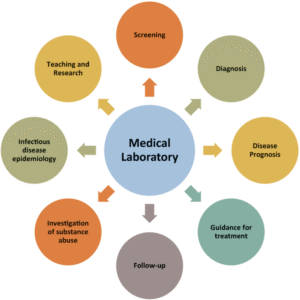
clinical laboratories are the foundation of evidence-based medicine. They perform a wide range of diagnostic tests that provide critical insights into a patient’s health status. Here are some of the key ways lab contribute to early disease detection.
- Routine Screening Tests : Routine tests such as Complete Blood Counts (CBC), Lipid Profiles, Blood Glucose Levels, and Liver Function Tests can reveal early warning signs of disease. For example, elevated glucose levels can indicate prediabetes, while abnormal liver enzymes might signal early liver damage, even before symptoms arise.
- Molecular and Genetic Testing: Advances in Molecular diagnostics allow laboratories to detect genetic mutations and biomarkers associated with disease susceptibility. Tests for BRCA gene mutations, for example, can identify individuals at higher risk for breast and ovarian cancer, empowering them to take preventive steps.
- Infectious Disease Surveillance: Clinical labs play a crucial role in identifying infections such as HIIV, hepatitis, and tuberculosis, Sometimes before patients experience symptoms. Early diagnosis not only improves patient outcomes but also helps prevent diease spread within communities.
- Biomarker Discovery and Monitoring: Modern labs are continually developing tests that measure biomarkers. Substances in the body that can indicate early disease processes. Elevated cardiac enzymes, for example, can signal heart disease before a major event occurs.
Technology Driving Early Detection
Today’s laboratories are equipped with cutting-edge technology that makes testing faster, more accurate, and more predictive than ever before. Innovations such as:
- Automation and Artificial Intelligence[AI] For faster analysis and fewer errors
- Point-of-care testing [POCT] devices for rapid results in clinics and remotes settings
- Next – generation sequencing [NGS]for genetic and cancer screening
- High-sensitivity assays that defects disease makers at trace levels
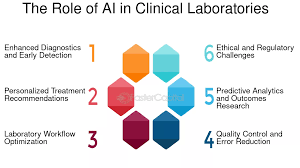
These advancements mean laboratories can deliver earlier ,more precise diagnoses that guide treatment decisions and improves outcomes.
Factors Influencing Laboratory Test Results
Pre-Analytical Factors
Pre-analytical factors encompass all steps involved in specimen collection, handling, and transportation before analysis in the laboratory. Errors in this phase can significantly impact the reliability of test results. For example, improper specimen collection techniques, such as using the wrong collection tubes or not following proper venipuncture procedures, can lead to sample contamination and inaccurate results. Additionally, factors like patient preparation (fasting status, medication usage, timing of sample collection) can also influence test outcomes. For instance, certain tests, like lipid profiles, require patients to fast before sample collection to obtain accurate results. Failure to adhere to these pre-analytical requirements can lead to erroneous results and misinterpretation of patient data.
Therefore, proper training of healthcare professionals involved in specimen collection and handling is essential to minimize pre-analytical errors and ensure the integrity of laboratory test results.
Analytical Factors
Analytical factors refer to the processes involved in the actual analysis of specimens in the laboratory, including instrument calibration, reagent quality, and operator technique. Variability in these factors can lead to inconsistencies in test results. For example, instrument malfunctions, improper calibration, or the use of outdated reagents can affect the accuracy and precision of test measurements. Moreover, operator errors, such as incorrect pipetting or inadequate mixing of reagents, can introduce variability and bias in test results.
Implementing internal quality control procedures, regular instrument maintenance, and proficiency testing can help minimize analytical errors and ensure the reliability of test results. Furthermore, adherence to standardized protocols and training of laboratory staff on proper analytical techniques are crucial for reducing errors in the testing phase.
Post-Analytical Factors
Post-analytical factors involve the interpretation and communication of laboratory test results to healthcare providers and patients. Errors in this phase can lead to misdiagnosis, inappropriate treatment decisions, and patient harm. For example, incorrect result reporting, transcription errors, and misinterpretation of test values can compromise the utility of laboratory data. Furthermore, delays in result communication or failure to follow up on abnormal findings can impact patient outcomes.
Studies have underscored the significance of post-analytical factors in ensuring the effective utilization of laboratory test results. Timely reporting of critical values, proper documentation of results, and active participation in multidisciplinary discussions are essential to enhance the clinical impact of laboratory testing.
Common Laboratory Tests Used in Disease Diagnosis
In any disease diagnosis, laboratory testing is crucial in providing valuable information about a patient’s health status. This section will discuss the common laboratory tests used in disease diagnosis, including ‘blood tests, urine tests, imaging tests, and genetic tests’.
Blood Tests
Blood tests are among the most commonly ordered diagnostic tests by healthcare providers. These tests can reveal various aspects of the patient’s health, such as the presence of infection, inflammation, organ function, and blood cell levels. For example, ‘a complete blood count (CBC) provides information on red blood cells, white blood cells, and platelets, which can help diagnose conditions like anemia, infections, and leukemia. Another common blood test is the basic metabolic panel (BMP), which checks electrolyte levels, kidney function, and blood sugar levels’. Elevated levels of specific enzymes in the blood, such as creatinine kinase (CK) or liver enzymes, could indicate damage to these organs.
Furthermore, specific blood tests are utilized to diagnose diseases like diabetes (glucose levels), thyroid disorders (thyroid-stimulating hormone, TSH), and autoimmune diseases (antibody tests) can assess cholesterol levels and help in predicting the risk of heart disease.
Imaging Tests
Imaging tests, such as X-rays, ultrasounds, CT scans, MRI and positron emission tomography (PET) scans, are essential in diagnosing various conditions. These tests can provide detailed images of internal organs and tissues, helping healthcare providers visualize abnormalities, tumors, fractures, and other structural issues. For example, chest X-rays can detect lung infections or tumors, while CT scans can identify blockages in blood vessels or internal bleeding. MRI scans are particularly useful in assessing soft tissue structures like the brain, spinal cord, and joints.
Genetic Tests
Genetic tests are increasingly being used in disease diagnosis to identify genetic mutations that may contribute to inherited conditions, certain cancers, and other diseases (Zunic et al., 2011). For example, genetic tests can help diagnose genetic disorders like ‘cystic fibrosis, sickle cell anemia, and Huntington’s disease’ by detecting specific gene mutations. Moreover, genetic testing is crucial in personalized medicine and pharmacogenomics, where, based on a patient’s genetic composition, genetic data is utilized to establish the best course of action and dosages.
It is crucial to remember that laboratory tests are an invaluable tool for diagnosing diseases, but they should always be interpreted in the context of the patient’s physical examination, medical history, and other diagnostic procedures (Fan et al., 2016). Furthermore, a number of variables, including when the sample is collected, how the patient is prepared, how the sample is handled, and the methods used in the laboratory for processing, might affect the precision and dependability of laboratory testing.
Biochemical Techniques
Biochemical techniques play a crucial role in disease diagnosis by analyzing various biomarkers and metabolites in biological samples. One of the commonly used biochemical techniques is enzymatic assays, which allow the quantification of specific enzymes that are indicative of specific diseases. For example, measuring cardiac troponin levels using enzyme-linked immunosorbent assay (ELISA) is vital for diagnosing acute myocardial infarction. Another example is the measurement of blood glucose levels using colorimetric assays for monitoring diabetes.
Molecular Techniques
Molecular techniques have revolutionized disease diagnosis by enabling the detection of genetic material such as DNA and RNA from pathogens or host cells. Polymerase chain reaction (PCR) is a powerful molecular method that strengthens particular DNA arrangements, allowing the discovery of pathogens like viruses and bacteria. For instance, PCR-based testing is widely used for diagnosing infectious diseases such as COVID-19. Furthermore, next-generation sequencing (NGS) has enabled comprehensive analysis of genetic material, aiding in the identification of mutations
Empowering patients Through awareness
Patients also pay a key role in early diseases detection regular checkups and preventive screenings are vital, even when you feel healthy. By staying informed and partnering with healthcare providers, individuals can benefit from early insights laboratories provide.
In Summary
Clinical laboratories are much more than testing centers- they are guardians of public health. By uncovering early signs of diseases, they enable timely intervention, improve treatment outcomes, and support healthier communities.